Saturday, August 27, 2011

A Walk Along Pelindung Trail

Now that the Hari Raya school break has begun, I will attempt to get caught up on some blogging.

Several weekends ago, some friends visited us from Hong Kong and wanted to do some low-level hiking.  Pelindung Trail, beginning at Teluk Cempedak beach (TC) is one such easy walk and to the trailhead we commenced.  The trail runs along the ridgeline between the Tanjong (rocky cape) just to the north of TC and Bukit Pelindung which is only a kilometer or so inland.  The air photo posted below shows the approximate locaton of the start of the trail.  The Majlis Perbandaran Kuantan has a parking lot behind the McDonald's restaurant for only RM1 and it is a short walk to the trailhead along the boardwalk.

Pelindung Trail Starting Just North of Teluk Cempedak (Hotel Hilton at bottom of photo)
The boardwalk out along the edge of the Tanjung north of TC has been boarded up due to (1) a large tree falling and destroying a section of the boardwalk, and (2) a failure to maintain the wooden structure evidenced by missing treads and railings.  That does not stop people from by-passing the boarded-up entrance and climbing up onto the boardwalk further down the line.

Boardwalk currently boarded up (note missing railing)

Downed tree damage to boardwalk

After walking 50 meters or so along the boardwalk (and stopping to entertain the monkeys), it is time to find a short set of concrete steps which begin the hike up the hill.  This is, technically, the beginning of the Pelindung Trail but really the trail starts at the top of the ridge.  There are numerous paths up to the trailhead and I struggle this day to find the best one since there has been signficant changes since the last time I was here.  (Obvious storm damage brought down a bunch of trees in the area.)

Before heading uphill, we stop and take a look at the South China Sea crashing into the rocks of the Tanjung and look back towards TC for the derivative postcard view.

South China Sea meets Granite
TC, the place to be
The hike uphill is a hard, 5-10 minute slog on a slippery-when-wet trail.  But once on top of the ridge, the rest of the trail is quite easy, as it follows the gentle up-and-downs along the ridge.  Granite is the bedrock and there are quite frequent outcrops along the way.

Yes, we can take this for granite!

An epiphyte clinging to life on a granite boulder
One of my favorite things to see along the trail are the epiphytes, of which I have documented previously.  These feisty plants cling to life on the sides of granite boulders, and on the branches of trees, and in crevices, where they create their own soil and obtain water from mist and rain running along the boulder faces.  Epiphytes benefit from having adventitious roots, which have suction-cup-like devices that help hold them to surfaces and provide structural support.

Adventitius root pryed off a rock for your viewing pleasure!
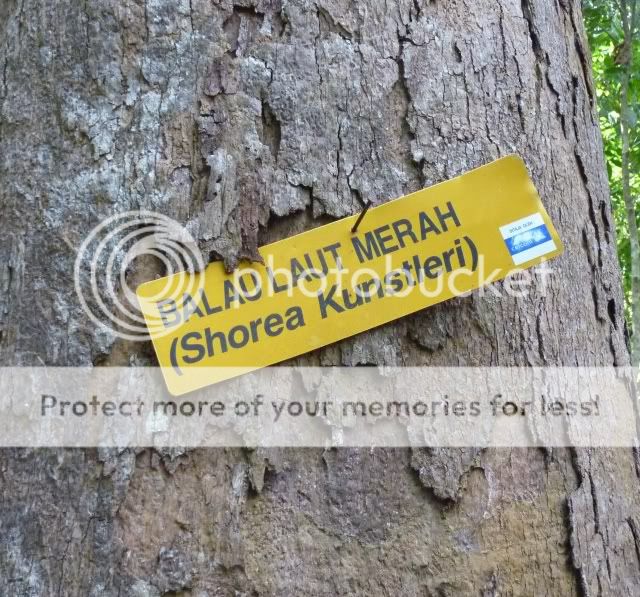
And, of course, there are trees, lots of trees to see.  The tropical rain-forest has a greater variety of tree species than any other type of forest on earth, and is famous for its triple-canopy.  Along the Pelindung Trail, the Forestry Department has even sign-boarded some of the major tree species.

Looking up a Shorea trunk

Balau Laut Merah produces "mahogany" lumber


Strangler figs are another tropical speciality.  This genus (Ficus, yes, YOUR friendly indoor plant) climbs up trees in a spiral fashion, creates a scaffold-like structure around its host's trunk and then hangs on for life while the underlying tree eventually dies.  Long, adventitious roots are sent down from above to help in the search for further victims, or else to mine water from the soil.  It is these vines that provide the transportation system for monkeys and Tarzans.

Strangler fig (Ficus) climbing its host tree

Hong Kong friends hanging playing Jane and Tarzan
Of course, most non-scientists are more interested in critters than in rocks or plants, so we keep a lookout for the occasional snake, and the ubiquitous marching ant army.

Green snake

Ants marching (not the DMBand)
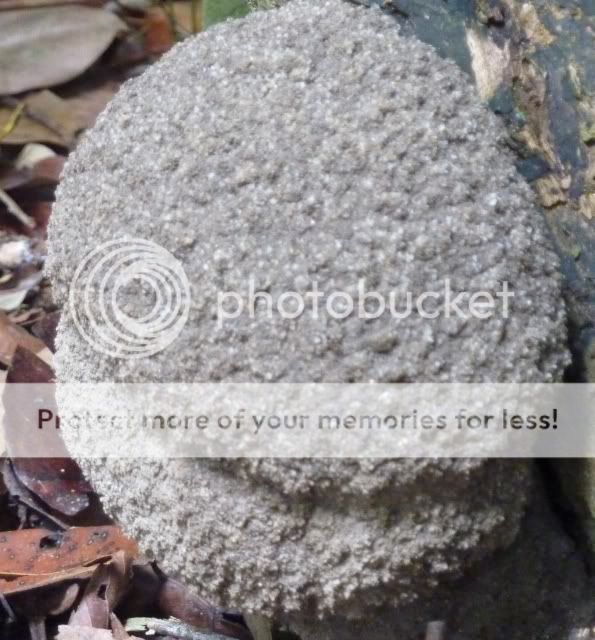
Termites are also quite numerous, being found in rotting tree trunks.  Their nests and trails are found all over the forest.

Termite colony
Halfway down the trail, we stop to sit and chat in the cool, quiet of the forest.  Well, not THAT quiet as the jungle insects chirp up a storm.  The Forestry Deparment has provided several sites where stone benches are placed and they are great for just sitting and cooling down.  If you are going to hike the Malaysian jungle, be sure to bring plenty of water, and a towel for wiping the sweat off the face and back of the neck.  Unlike other trails that I have taken, the Pelindung Trail does not seem to have any leeches as I have not come across them in my multiple trips.  The trail does end at a trailhead near Bukit Pelindung, which is reached by a road uphill near the JPJ office on Jalan Dato Bahaman.  I never make it that far.  For me, a walk is a walk, not a triathlon!  I am always aware that I need to TURN AROUND and walk back the same distance that I came, so I limit how far OUT I go.

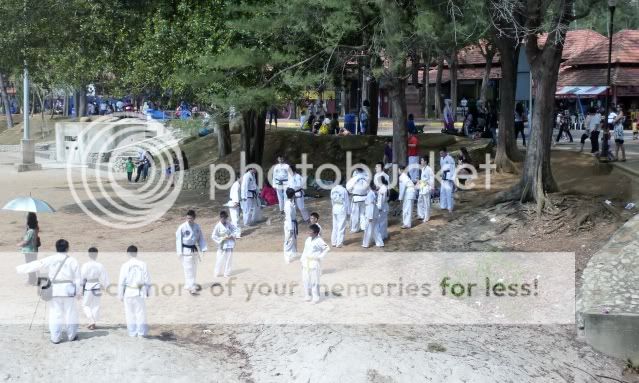
After a half hour of chatting, we head back to TC, where a Tae Kwon Do group is doing sessions on the beach.  Iced Coca-Cola at one of the beach stalls refreshes us and we head back home feeling a bit more self-satisfied for having taken a hike.

Tae Kwon Do at TC


Saturday, July 30, 2011

Teak's Last-Minute July Mish-Mash Post

Wow, July has fled and I have nothing posted to show for it.

It's not that I have not been busy, quite the contrary.

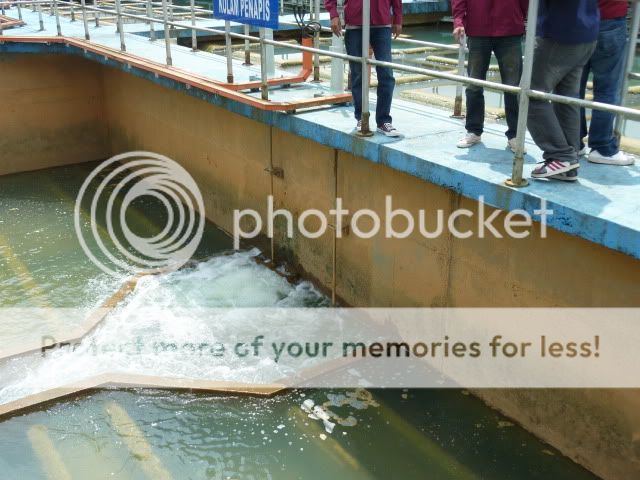
A new semester has begun, four weeks earlier than normal, with a whole new set of students and then a bunch of returning students in new subjects.  Here a group of Environmental Engineering students pose with the manager of Jabatan Bekalan Air's Semambu water treatment centre.

Environmental Engineering Field Trip to JBA Semambu
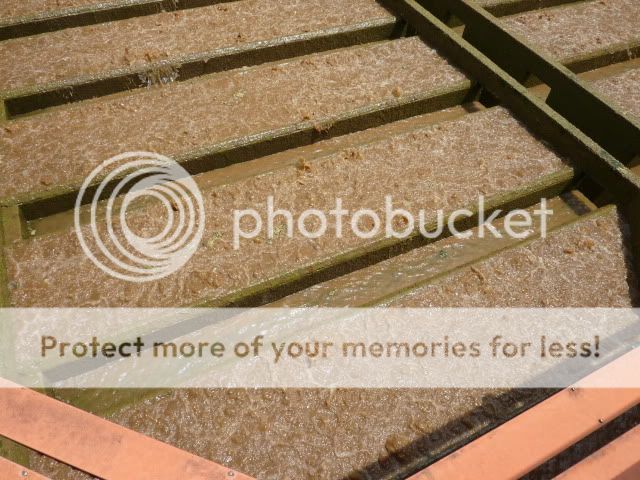
One of the surprising things (to the uninformed) is that to clean water, one must first make it more dirty.  This tank shows brown flocculent being mixed with the suspended sediments in the water.  After the violent mixing, the water is allowed to sit for a while so that the large blocks of floc and sediment can settle out, much quicker than if no floc were used.

Drinking water?  After the floc settles, you betcha!
The Semambu plant treats ~68 million gallons of water every day.  The water is sourced from the Kuantan River near Kampung Kobat and seven large-capacity pumps are used to send it the ~15 kilometers to the Semambu plant.


On a muggy, cloudy July weekend, the DW and I attended an engagement ceremony for the sister of a friend.  Called pertunangan, the ceremony had the groom's family traveling from their home in Negri Sembilan -land of the Minangkabu- to Kuantan (3 hours) in a convoy.  Everyone waited until the groom's entire family arrived and then they marched to the bride's parents' house carrying the gifts.  After taking some photos, my friend had to race back to the house ahead of the pack.

Run Zack, run!

The future bride in her sparkling outfit

I didn't go into the house to watch the largely symbolic discussion between the two families, but rather hung around outside taking Teak-Style photos.  Many Malaysian houses using artistic pieces in their metal gates, door and window grills.

Decorative window grill

And, finally, one can never see too many cloud shots and so here we get one of cumulous building over the South China Sea.  Photo taken from Taman Gelora Park with the gelora (choppy water) in evidence.

Cumulous building over the South China Sea


Monday, June 20, 2011

Lentang Forest Recreational Park (Air Terjun / Hutan Lipur Lentang)

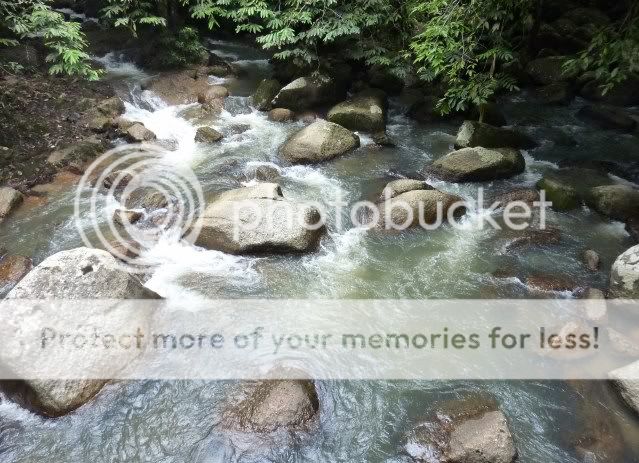
Benus River in the Lentang Forest Recreational Park
Lentang waterfall is actually not a waterfall, but a stretch of the Benus River as it drops through a large section of granitic boulders.  The Benus forms in the mountains above Kampung Janda Baik and picks up the Sum Sum River just downstream of the Kampung.  It flows through a Recreational Forest Park (Hutan Lipur) before emerging from the jungle and going under the Karak Highway.  The Karak is the major east-west roadway which carries people from the population centre of Kuala Lumpur to the east coast and north through Bentong and the township of Karak.  It is a great place to stop for a picnic, swim in the slower, lower section or to enjoy a cooling soak in the upper boulder stretch.

If you are driving from Kuala Lumpur eastward, look for the exit sign after passing through the tunnel and going past Genting Sempah.  It is several kilometers down the hill with an exit to the left and back under the highway.  If you are going UPhill towards KL, then the exit is a simple left exit to the front gate.
Boulder Rapids (not a Waterfall)
The lower part of the Benus River is wide and shallow, with a sandy bottom, and is a picnic/swimming (wading) section for families and children.  For the more adventurous (not that much more), there is a section further upstream of a boulder patch in which the water drops down through with small pools and great sounds.  Boulder rapids are not true waterfalls, but if one has tinnitus, they are great at providing white noise to sooth the soul.  (Put the following video on a loop and see if I'm correct!)


Benus River Suspension Bridge
Massive Leaves
Like a lot of Malaysian recreational areas, they have tacked signs up to several trees indicating the genus and species, and sometimes with more information like uses of the tree.  I like that feature since the Malaysian rain forest has an incredible diversity of trees, bushes, butterflies, flowers, insects, birds, and trash.  (Need I say it, this recreational park has its own set of food outlets.)
Another Shorea species
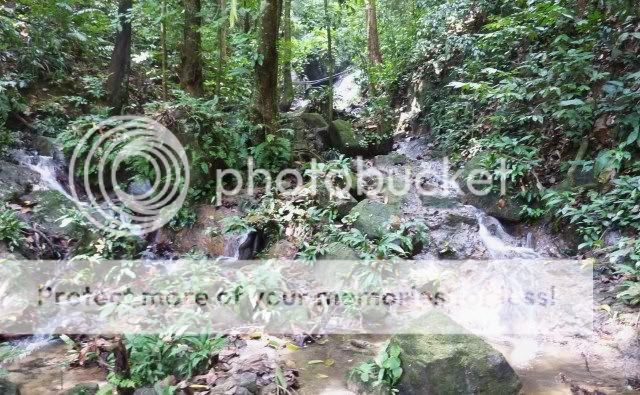
Walking up the road a short ways beyond the food stalls, I came to a side stream which has a wading pool built at the bottom of a diversion wall.  Further upstream, I found a very sharp, steep, V-shaped canyon that has all of the features of a landslide-scoured channel.
Side Canyon With Channel Scour to Bedrock
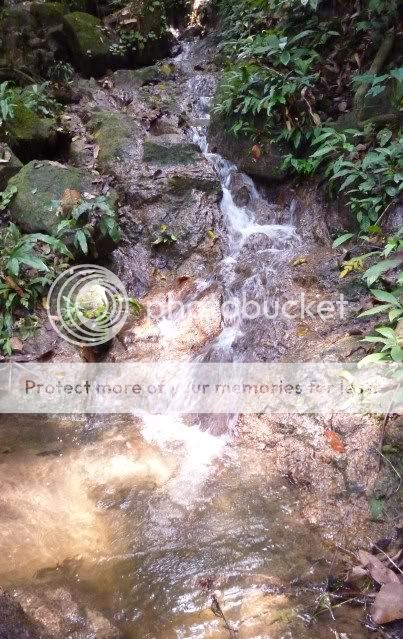
The photo above shows water flowing directly on top of bare bedrock (i.e., no streambed gravels) with an isolated patch of forest in the middle.  There is a true knickpoint (waterfall) in the background just visible as a patch of white to the left of the tree on the far right side.  (Some day when I have more time available -i.e., no one waiting for me to stop my canyon climbing- I want to take a hike further upstream.)  There is a story here.

Here is a closer shot of the flow over bare bedrock.
Flow Over Bare Bedrock
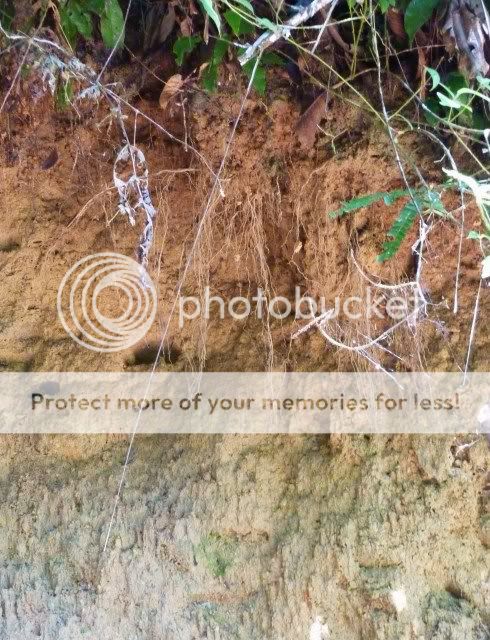
The regolith in this canyon is quite exposed along the edge, another indication that a pile of rocks and soil were flushed out of this section during some large rainstorm-induced flow in the past.

Exposed Regolith
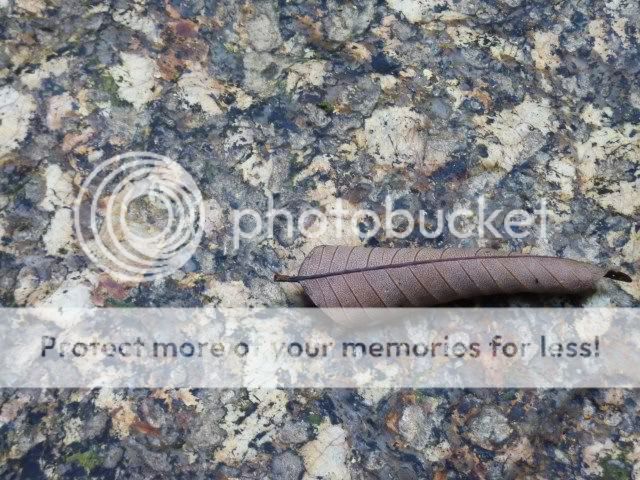
The rocks in this area are full of feldspar crystals, which indicates rocks in the granite family, but these were somewhat low in quartz, thus, something like a diorite or gabbro.  (I need a real geologist to take a look and tell me what the following photo shows.)
Feldspar Crystals in Bedrock Boulder
This side canyon is just uphill from the boulder stretch on the Benus River, so one can surmise that many of the boulders in the Benus (well-rounded) came down from this canyon and were eroded by the flow of the river.
But, hey, this blog post is getting a bit rocky now so I'll just say that the Lentang Park is a great place to stop off on a hot day, and there are a lot those in Malaysia!


Saturday, June 18, 2011

Permanent Residency (PR) : How Can?

Any expat who has lived in Malaysia for several years will receive inevitably the question from friends "Why don't you try for PR (Permanent Residency)?"  Well, why not?

This question has been put to me many times before, but recently an added impetus came from my current employer when it was stated that I needed to consider PR if there was a chance of contract extension next year. Thus it was that I took it upon myself to research the PR process.

Last year, Malaysia seemingly relaxed its standards for PR as stated by the Prime Minister in his 2010 budget.  There are now SIX categories of eligibility under which a person may apply.

Category One : Filthy Rich
An individual who puts US$2 million (current exchange rate = RM6 million) into a fixed deposit into any bank in Malaysia will be granted the opportunity to apply for PR status.  This is still no guarantee, however, as it clearly states on the bottom of the PR application form (IM.4) "Even though you may have fulfilled all the conditions, your application may still be rejected if the government is not satisfied with your application."

But, hey, with RM6 million of your money available for Malaysians to borrow from your bank, your chances are probably pretty good.  Fixed deposits currently pay around 2.75% annual interest.

Category Two : Expert (Highly Talented/Highly Skilled Individual)
An individual who is classified as "world class" in terms of talent, expertise, and skills will be granted PR within 24 hours after application if some international organisation recognises them as such.  Huh?  Who, praytell, could fit this category unless it was someone world-reknown (and rich) like Bill Gates, Warren Buffett, or Jean Todt?  Well, the latter has actually taken up Malaysian PR and it certainly helps that Formula One racing (of which he headed up Team Ferrari for a period) is quite popular with the Bigshots.  And he is married to Malaysia's own Michelle Yeoh.  (That qualifies him under #4 below.)

Category Three : Professional (Outstanding Skills in Any Field)
Similar to #2, this individual needs a Malaysian ministry to vet that they are a professional of outstanding skills, and also (like #2) requires that a Certificate of Good Conduct is obtained from their home country.  Unfortunately, this category does not provide an easy path for the trailing spouse who must qualify for PR on his or her own merit, or wait five years, playing the Visa Run Game of which expats tire after several trips.

Category Four : Married to a Malaysian Citizen
Fairly self-explanatory, my darling non-Malaysian wife won't let me consider this avenue for PR!

Category Five : Returning Expert Programme
This is for the spouses of Malaysians who have been residing overseas for several years.  It is part of the inducement for Malaysians to come back and help build Malaysia.  This is the same as category #4 (married to a Malaysian) except that instead of waiting five years to receive PR, this category will give PR to the trailing non-Malaysian spouse in only one month!  They really want you orang Malaysia yang tinggal di luar Malaysia balik cepat!

Category Six : Point System
This is the most interesting category since it gives hope to the seemingly hopeless, who don't qualify under #1-5.  Basically, there are 120 points spread over 7 criteria:
Age (Max 10 points)
Academic/Professional Qualification (Max 20 points)
Malay language proficiency (Max 10 points)
Relationship ties with Malaysians (Max 30 points)
Length of stay in Malaysia (Max 10 points)
Investment in Malaysia (Max 30 points)
Employment/work experience in Malaysia (Max 10 points)

To qualify for PR, one must obtain at least 65 points from the seven criteria.  This may sound fairly easy initially, but an online calculator (here) reveals the difficulty when you consider that 50% of the points are in two categories: Relationship ties and Investment.

I performed a variety of calculations using the online calculator and found that it is nearly impossible for someone to qualify under the points system unless:
1) Your father and/or mother are Malaysian citizens or PR themselves;
2) You employ over 31 Malaysians in a business that you establish.

Since neither of my parents are Malaysians, I looked more closely at the Investment option.  Even if I nailed 10 points from each of the other five categories (which I couldn't; I don't hold the PhD), I would still need 15 points from the Investment option.  Of these 30 points, fully 50% of them (15 points) are earned by employing Malaysians: 5 points if employing 31 to 50 Malaysians; 10 points if employing 51 to 100; and a full 15 points if employing over 100 Malaysians.  (Clearly the government is looking for someone else to employ the thousands of graduates whom the government will not be able to employ.)  In lieu of that, one would need to invest more than RM500,000 in a house, AND over RM500,000 in a fixed deposit, AND over RM500,000 in a business.  It has to be the combination; each category has a maximum of five points with nothing to be gained over RM500k.
 
Wow.  So the point is, unless you marry a Malaysian, travel back in time to force your parents to move to Malaysia and become residents, or have lot$ of $pecial $tuff, your chances of PR are pretty low.